5 Ways Rotational Moulding is Revolutionising Industrial Product Design
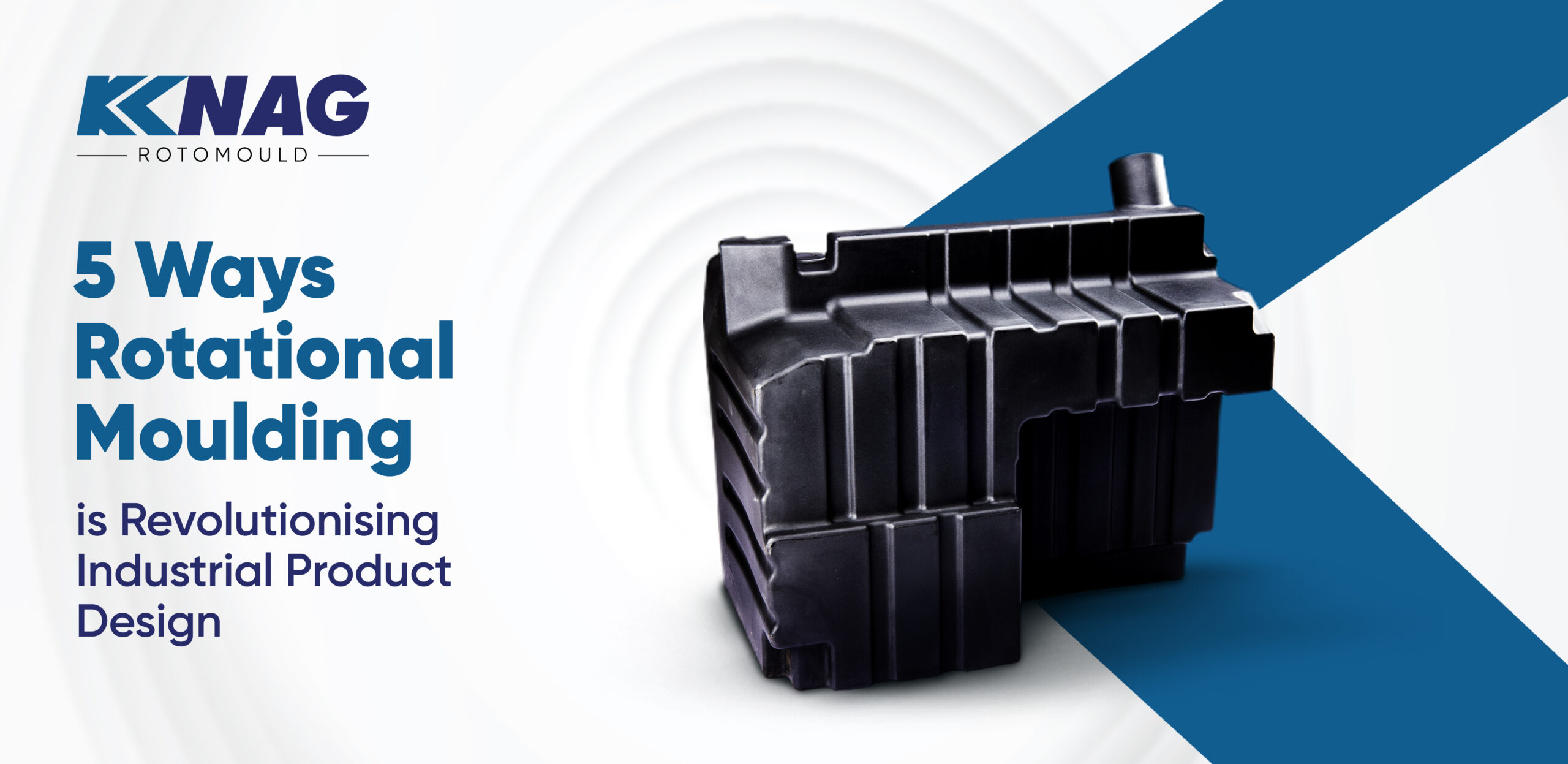
As industrial products become more complex, more aesthetic and more sustainable, traditional manufacturing methods often struggle to keep pace. That’s where rotational moulding in industrial design is turning heads, offering unmatched creative flexibility, production efficiency and long-term performance.
So, what is rotational moulding used for? Beyond the familiar tanks and containers, it is now shaping a new generation of industrial products. These include interior trims and mirror arms in automobiles, marine buoys, pipe floats used in dredging and floating waste segregators on water bodies. The shift is clear: Rotomoulding product innovation is no longer just functional; it’s a competitive advantage in design and production.
Let’s explore five ways rotational moulding is revolutionising industrial product design today.
Table of Contents
1. Design Freedom Like Never Before
Industrial design with rotomoulding allows greater freedom to create seamless, hollow forms with uniform walls, integrated features and complex geometries. It opens up new possibilities that are often difficult to achieve through conventional processes.
Key Design Advantages:
- Seamless, hollow parts can be created with intricate curves, recesses and undercuts.
- Double-walled structures (for insulation or stiffness) are possible without joining parts.
- Wall thickness is uniform across the product.
- Undercuts can be accommodated to a certain extent, enabling more complex part geometries.
Additionally, you can integrate handles, threading, mounting inserts, textures, logos or grip zones directly into the mould; no post-moulding operation is required. This gives designers the freedom to explore ergonomic forms, futuristic aesthetics and highly functional features, all without compromising manufacturability.
2. Optimised for Low-Volume, Large Hollow Products
Rotational moulding is well-suited for manufacturing large hollow components in smaller quantities. It offers design flexibility and production suitability without compromising on quality.
Why It Works:
Moulds for rotomoulding are less expensive to produce than those for injection or blow moulding. They can be made from aluminium or steel, depending on the requirements of the project.
Simpler mould construction and minimal finishing work help keep the overall cost per part lower, especially in low-to medium-volume production runs.
This makes industrial design with rotomoulding a preferred choice for applications where size, shape complexity and lower production volume are key factors.
3. Structural Integrity Meets Lightweight Efficiency
Functionality is non-negotiable in industrial product design. It is important that products must withstand stress, weight, exposure and impact. Notwithstanding, they must also be light enough for transport and handling.
Built-In Strength Benefits:
- No weld lines or seams, which are common failure points in joined plastic parts.
- Stress-free moulding: Unlike injection moulding, rotomoulding cools naturally without forced pressure, reducing internal stress in the material.
- Can accommodate thicker walls where needed, e.g., base reinforcement or mounting zones.
- Resistant to cracking, UV degradation and weathering, especially when using LLDPE.
These properties make rotational moulding products a dependable choice for demanding industrial applications where both strength and lightweight performance are critical.
4. A Natural Fit for Sustainable Manufacturing
Designers and manufacturers are under constant pressure to cut waste, reduce energy use and choose environmentally responsible processes. The process of rotational moulding in industrial design supports several sustainability goals, from material efficiency to lower energy consumption.
Sustainability Credentials:
- High material efficiency: Minimal waste with almost 100% material usage per part.
- No sprues, runners or offcuts; the entire shot is used in forming the product.
- Many rotational moulders now use recycled polyethylene, especially for non-visual parts.
- Energy-efficient cycles: The process uses heat and rotation, without high-pressure injection or water cooling.
Additionally, the ability to create single-piece components with minimal finishing makes rotomoulding product innovation well-suited for sustainable manufacturing, reducing reliance on adhesives and energy-heavy assembly processes.
5. Versatile Applications in Every Industry
If you’re still wondering, “What products are made from rotational moulding?”, the answer spans virtually every industrial vertical. From transport and healthcare to consumer goods and smart infrastructure, industrial design with rotomoulding is opening new doors.
| Industry | Examples of Rotational Moulding Products |
|---|---|
| Agriculture | Fertiliser bins, water tanks, chemical sprayers |
| Automotive | Fuel tanks, ducts, reservoirs, bumpers |
| Consumer Products | Coolers, furniture, toys, kayaks |
| Defence | Field equipment, rugged cases, portable sanitation units |
| Flotation | Buoys, floating docks |
| Healthcare | Sealed casings, bed parts, cleanroom bins |
| Infrastructure | Urban bins, signage bases, traffic cones, water barriers |
Conclusion
Rotational moulding isn’t just a manufacturing process; it’s a design enabler. From ergonomic furniture to rugged agricultural tanks, the versatility and efficiency of rotational moulding in industrial design is empowering creators to build products that are better-looking, stronger, and more sustainable.
At K. K. Nag, we have been pioneers of rotational moulding in India, delivering customised, durable and sustainable solutions for industries ranging from furniture and material handling to automotive and beyond. If you’re exploring your next industrial product with rotational moulding, our team is ready to support you.
FAQs
1. What makes rotational moulding suitable for industrial design?
Ans: Rotational moulding allows for seamless, hollow components with consistent wall thickness, integrated features and excellent durability. This makes it ideal for designing functional, aesthetic and lightweight industrial products.
2. Is rotomoulding suitable for low-volume production?
Ans: Yes, the investments required for making a tool is lesser thereby making it cost efficient overall for low volume production.
3. What industries benefit most from rotational moulding?
Ans: Rotational moulding finds applications in agriculture, automotive, healthcare, defence, flotation and solar, offering solutions wherever durable, lightweight and custom-shaped plastic components are needed.
4. How does rotational moulding differ from other plastic processing methods?
Ans: Unlike injection or blow moulding, rotational moulding does not use high pressure. It relies on heat and slow rotation, allowing for stress-free, seamless parts with more design freedom, especially for large hollow components.
Featured Blogs
How K. K. Nag Is Leading the Way in Polymer Solutions for EV Manufacturing
The automotive industry is at a pivotal moment. As the world shifts gears towards sustainable transport, electric vehicles (EVs) are becoming central to this transformation. In India, retail [...]
Why Polymer Components are Crucial in EV Manufacturing
The rise of electric vehicles has done more than just redefine the powertrain, it’s revolutionised the way manufacturers approach material selection and product design. Today, polymer components in [...]

Rotomoulded Insulated Boxes: The Key to Safe and Hygienic Food Handling
Despite stringent rules and regulations, the food industry is plagued with serious contamination and spoilage issues. Foodborne illness impacts approximately 100 million individuals each year in India [...]
Get in Touch with Us
We look forward to connecting with you!