
Comparing Rotomoulding and Blow Moulding: Which One Fits Your Application?
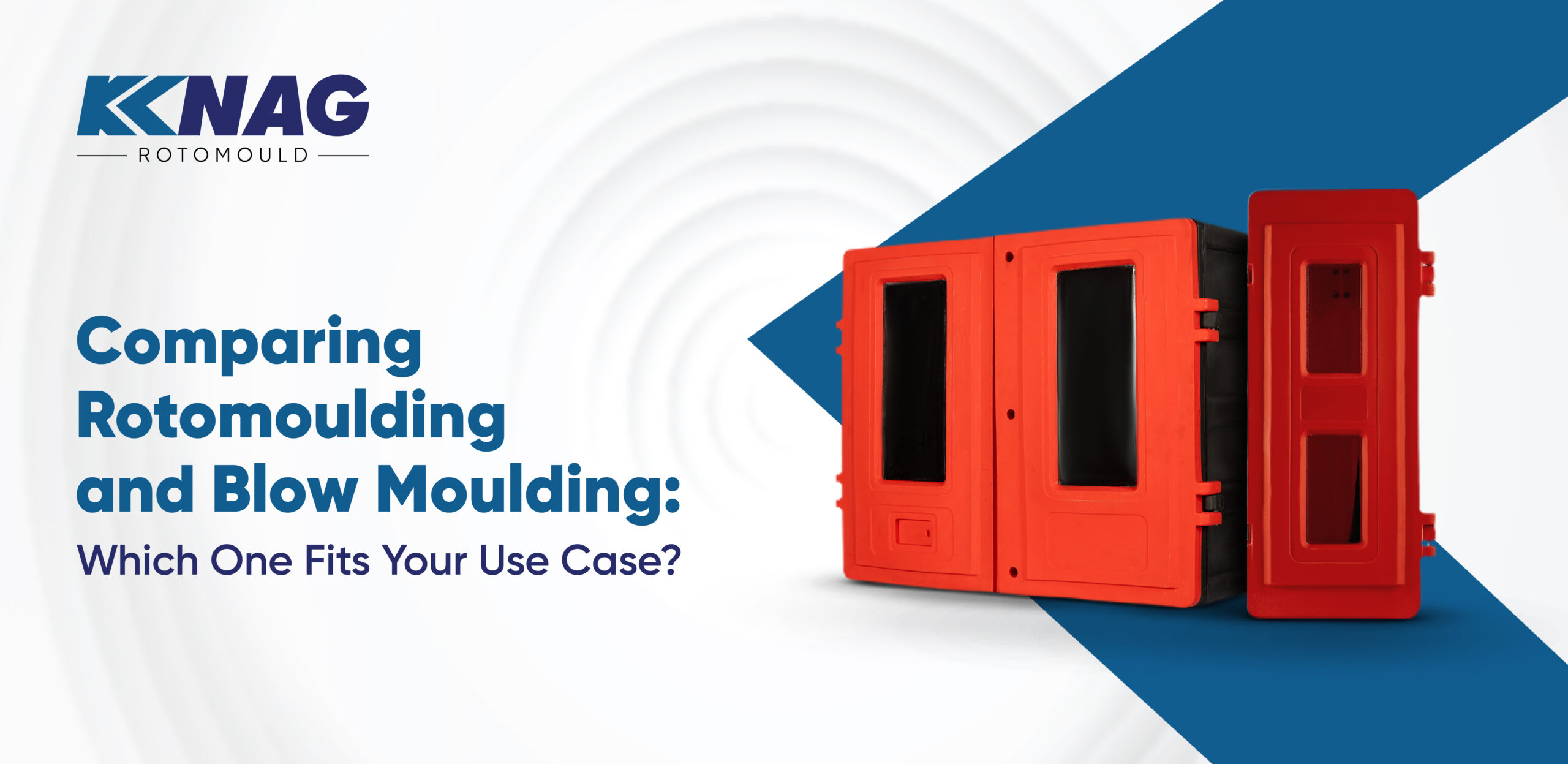
When it comes to manufacturing hollow plastic products, two popular methods dominate the industry: blow moulding and rotational moulding (commonly referred to as rotomoulding). While both techniques serve the same core purpose of creating strong, lightweight and durable plastic components, they differ significantly in process, applications, cost and suitability for specific requirements.
In this blog, we’ll explore the differences between blow moulding and rotational moulding, comparing them across key factors to help you determine the best moulding technique for your use case.
Table of Contents
What is Blow Moulding?
Blow moulding is a high-speed plastic forming process used to manufacture hollow plastic parts. The technique involves heating a thermoplastic parison (a preformed hollow tube), placing it in a mould cavity and inflating it with compressed air until it takes the shape of the mould. The part is then cooled and ejected.
Common Blow Moulding Applications:
- Bottles for beverages and personal care
- Passenger vehicle fuel tanks
- Small industrial tanks
Blow moulding is widely chosen for high-volume production due to its fast cycle times and low per-unit cost at scale. However, it’s typically best suited for less complicated shapes.
What is Rotomoulding?
Rotomoulding, or rotational moulding, is a low-pressure, high-temperature forming method. In this process, a powdered polymer is added to a hollow mould, which is then slowly rotated inside an oven. The material melts, adheres to the inner mould walls and forms the desired shape as it cools.
Rotomoulding allows for more complex designs and the incorporation of inserts during the moulding process.
Key Rotational Moulding Applications:
- Flotation products (buoys, kayaks, thrash barriers)
- Playground and recreational equipment
- Insulated containers
- Agricultural and industrial bins
- Commercial vehicle fuel tanks
- Earth-moving equipment components
- Storage tanks (large and small)
Rotomoulding is ideal for low to medium production volumes and excels in creating large, intricate, durable parts
Also Read: What is Rotational Moulding and How It Works
Rotomoulding vs Blow Moulding
Let’s compare blow-moulded vs rotomoulded products across important parameters:
| Attribute | Blow Moulding | Rotomoulding |
|---|---|---|
| Design Flexibility | Limited – best for simple, uniform shapes | Highly complex, multi-compartment parts are possible |
| Production Volume | High (ideal for 50,000+ units/year) | Low to medium (best under 50,000 units/year) |
| Wall Thickness Control | Good, uniform | Moderate with some variation |
| Cycle Time | Very fast | Slower |
| Tooling Cost | High upfront cost | Lower tooling cost |
| Durability | Lighter, suitable for less demanding use | Heavier, more robust and long-lasting |
Which Moulding Method Works Best for Your Product?
Selecting the right moulding technique depends largely on your product design, durability needs and production volume. Here’s where each technique excels in real-world applications:
Blow Moulding
Blow moulding is ideal for producing hollow plastic parts in high volumes, especially when uniform wall thickness and fast cycle times are critical. It’s commonly used for making plastic bottles, passenger vehicle fuel tanks, jerry cans and other lightweight containers.
If your application requires precision, consistent dimensions and mass production with efficiency and consistent quality, blow moulding is a strong fit, particularly for packaging, automotive and consumer product industries.
Rotational Moulding
Rotational moulding, on the other hand, is best suited for creating large, complex or custom-shaped hollow parts with seamless construction and thick, durable walls.
It’s ideal for low to medium production volumes and for applications where strength, impact resistance and design flexibility are critical. If your product needs structural integrity over volume efficiency, rotomoulding offers greater design flexibility and is the preferred choice.
Conclusion
If you’re looking for a trusted partner in rotomoulded solutions, K. K. Nag brings decades of expertise and proven capability in manufacturing durable, customised, high-performance parts for diverse industries.
We can help you design and deliver products that perform reliably, last and stand out. To learn more, get in touch with our team!
Featured Blogs

How K. K. Nag Is Leading the Way in Polymer Solutions for EV Manufacturing
The automotive industry is at a pivotal moment. As the world shifts gears towards sustainable transport, electric vehicles (EVs) are becoming central to this transformation. In India, retail [...]
Why Polymer Components are Crucial in EV Manufacturing
The rise of electric vehicles has done more than just redefine the powertrain, it’s revolutionised the way manufacturers approach material selection and product design. Today, polymer components in [...]

Rotomoulded Insulated Boxes: The Key to Safe and Hygienic Food Handling
Despite stringent rules and regulations, the food industry is plagued with serious contamination and spoilage issues. Foodborne illness impacts approximately 100 million individuals each year in India [...]
Get in Touch with Us
We look forward to connecting with you!