How K. K. Nag Is Leading the Way in Polymer Solutions for EV Manufacturing
The automotive industry is at a pivotal moment. As the world shifts gears towards sustainable transport, electric vehicles (EVs) are becoming central to this transformation. In India, retail sales figures from the Vahan portal reveal that 10.4 lakh EVs (1,047,788 units) were delivered to customers across the two- and three-wheeler, passenger and commercial vehicle segments from January to June 2025.
This growth brings with it new engineering challenges. EVs must be lighter, safer and more efficient, all while adhering to stricter global emission norms and evolving safety standards. Traditional materials like steel and aluminium, while strong, can fall short when it comes to balancing weight, sustainability and design flexibility.
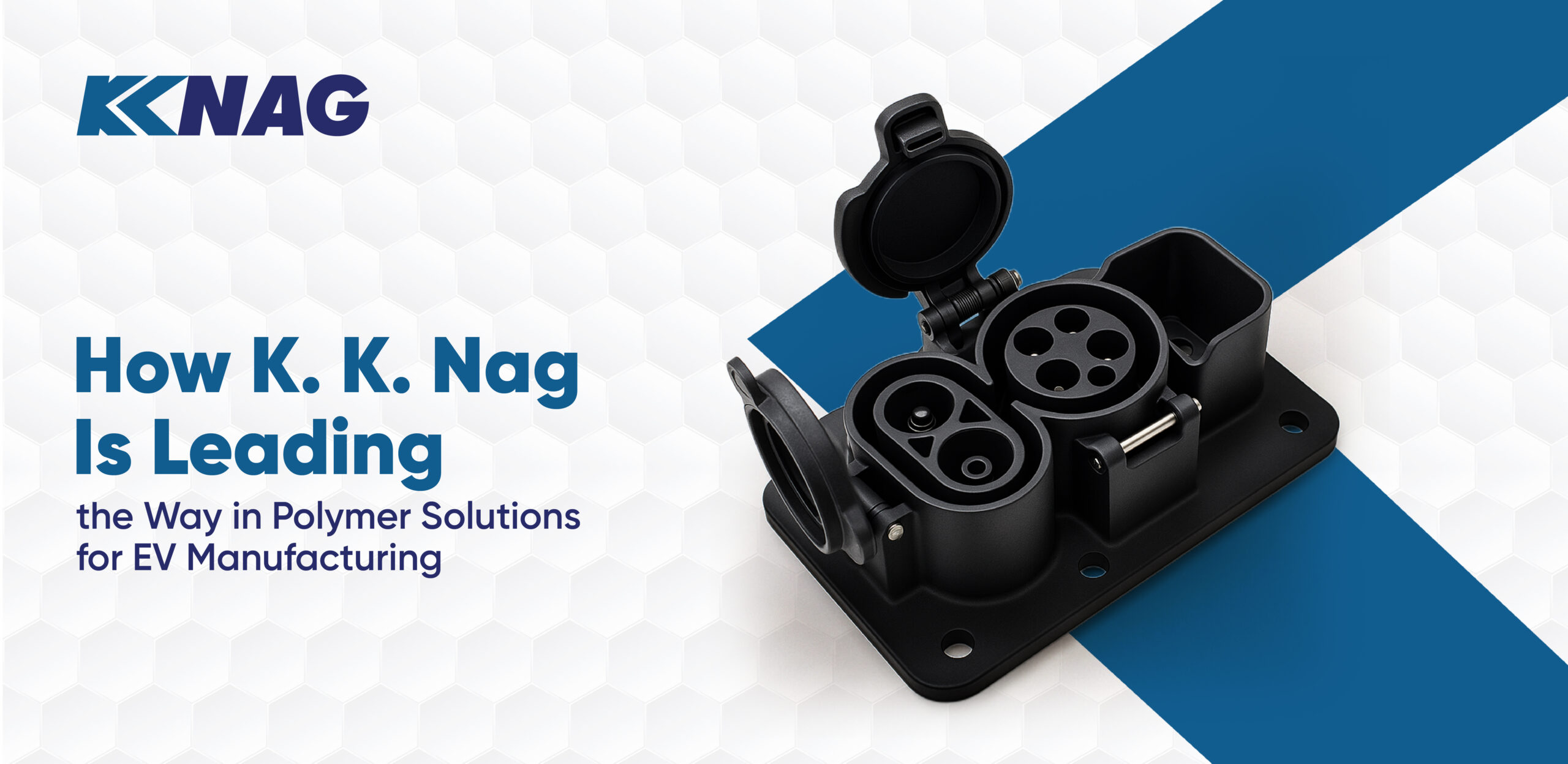
At K. K. Nag Private Limited, we believe that the answer lies in polymers in the automotive industry, specifically in advanced materials like Expanded Polypropylene (EPP) and Expanded Polystyrene (EPS). These EV plastic solutions are not just alternatives; they’re enablers of next-generation mobility.
Table of Contents
- 01. Why Polymers Are Critical to the EV Revolution
- 02. Empowering Electric Mobility with Tailored Polymer Innovation
- 03. Our Journey with Polymer Innovation
- 04. Tailored Solutions for Electric Mobility
- 05. Building a Greener, Smarter Mobility Ecosystem
- 06. Conclusion: Partnering with the EV Leaders of Tomorrow
Why Polymers Are Critical to the EV Revolution
As EV parts manufacturing evolves, the materials behind them must do more than just “fit.” They must perform, protect and last.
EPP is one such material leading the charge. It is lightweight, 100% recyclable and provides excellent energy absorption, making it ideal for EV applications from battery casings and crash pads to thermal insulation.
One often overlooked challenge in EVs is the added battery weight, up to 300–400 kg more than internal combustion engine vehicles. Here, lightweighting in electric vehicles becomes critical. A 10% reduction in vehicle weight can improve battery range by 13.7%, a figure that can make or break EV adoption, as per a report published by PMC.
Polymers like EPP offer a path to offset this weight gain while delivering superior crash safety, design flexibility and thermal management, a must for maintaining battery health between the ideal 0°C–45°C temperature range.
Also Read: Why Polymer Components are Crucial in EV Manufacturing
How K. K. Nag Is Empowering Electric Mobility with Tailored Polymer Innovation
As the EV industry accelerates towards a lighter, safer and more sustainable future, K. K. Nag is emerging as a critical enabler through its advanced polymer engineering capabilities.
With decades of experience and a pioneering role in introducing Expanded Polypropylene (EPP) to the Indian market, we offer EV-specific solutions that address the sector’s most pressing challenges, like weight reduction, thermal management and crash safety.
Our Journey with Polymer Innovation
At K. K. Nag Private Limited, our roots lie in material science and innovation. We were the first in India to introduce EPP, after pioneering the use of EPS decades ago. Over the years, our focus has evolved from simply supplying materials to co-developing advanced material solutions for EVs.
Our R&D-driven approach has helped us partner with some of the most respected OEMs and component manufacturers. With every project, our mission is clear: solve real-world EV challenges through customised, performance-driven polymer engineering.
Tailored Solutions for Electric Mobility
1. High-Performance EPP Components for EV Batteries and Interiors
From energy absorbers and crash pads to battery insulation panels and seat cores, our electric vehicle polymer components are designed to protect both passengers and critical EV systems. These parts not only reduce weight but also enhance passenger safety during collisions through superior impact absorption.
2. Custom Protective Packaging for EV Parts
EVs contain delicate and expensive components like lithium-ion battery modules, power electronics and e-drive motors, to name a few. We engineer reusable EPS/EPP packaging that protects these during transit and supports green logistics through recyclability and returnable supply chain models.
3. Rotomoulded Parts for Utility and Structural Needs
Our rotomoulded plastic solutions serve a range of applications, including fluid reservoirs, underbody shields and tooling compartments. These are especially valuable in EVs due to their durability, low tooling cost and suitability for low-volume manufacturing, making them ideal for both mainstream and niche EV platforms.
Building a Greener, Smarter Mobility Ecosystem
As we see it, the EV revolution is not just about electrification, it’s about optimising every link in the value chain, from materials to manufacturing to recycling.
We ensure all our EPP and EPS components support closed-loop recycling systems, allowing automakers and Tier 1 suppliers to meet their sustainability targets. This also supports a circular economy, reducing landfill waste and enabling long-term material reuse.
Looking ahead, we are also exploring smart polymer components with integrated sensors for real-time monitoring of battery temperatures, impact detection and structural stress in EV applications.
Conclusion: Partnering with the EV Leaders of Tomorrow
At K. K. Nag Private Limited, we manufacture polymers that will contribute to a more efficient and sustainable automotive future.
By leveraging the best plastic materials for EV parts like EPP and EPS, we help manufacturers reduce vehicle weight, enhance safety and improve thermal performance, without compromising on quality or sustainability.
We know that the shift to electric mobility won’t be solved by one solution alone but it will be powered by many smart ones.
Featured Blogs

How K. K. Nag Is Leading the Way in Polymer Solutions for EV Manufacturing
The automotive industry is at a pivotal moment. As the world shifts gears towards sustainable transport, electric vehicles (EVs) are becoming central to this transformation. In India, retail [...]
Why Polymer Components are Crucial in EV Manufacturing
The rise of electric vehicles has done more than just redefine the powertrain, it’s revolutionised the way manufacturers approach material selection and product design. Today, polymer components in [...]
Rotomoulded Insulated Boxes: The Key to Safe and Hygienic Food Handling
Despite stringent rules and regulations, the food industry is plagued with serious contamination and spoilage issues. Foodborne illness impacts approximately 100 million individuals each year in India [...]
Get in Touch with Us
We look forward to connecting with you!