How Rotomoulding Is Transforming the Production of Large-Scale Plastic Products
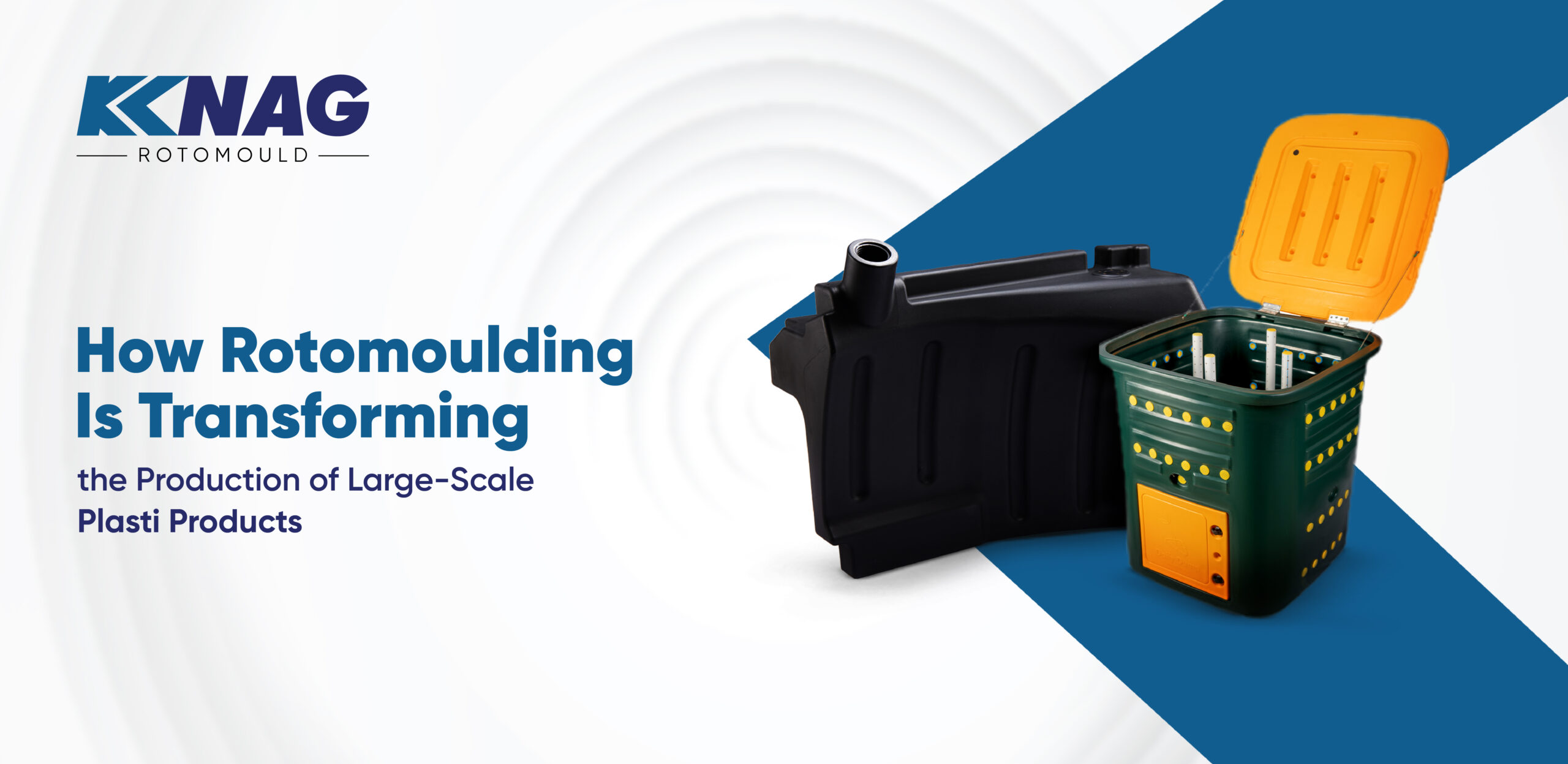
What do military-grade containers, kayak hulls and industrial water tanks have in common? They’re all made using rotational moulding – a powerful process designed to create large, seamless and highly durable plastic products. Industries that once faced challenges such as high tooling costs and limited design flexibility are increasingly turning to this method. By slowly rotating a hollow mould through a controlled heat-cool cycle, rotational moulding produces stress-free parts with uniform strength. This shift is changing unit economics, accelerating product development and reducing material waste — tangible advantages of rotational moulding that resonate from automotive to infrastructure.
Table of Contents
Overview of the Rotational Moulding Process
At its core, the method is straightforward. A measured dose of powdered polymer, commonly LLDPE (Linear Low-Density Polyethylene), MDPE (Medium-Density Polyethylene), HDPE (High-Density Polyethylene) or XLPE (Cross-Linked Polyethylene), is loaded into a steel or aluminium mould. The mould enters an oven and rotates around two perpendicular axes, allowing the molten resin to coat every interior surface evenly. Once the target thickness is reached, the tool moves to a cooling chamber before demoulding.
The process does not require high pressure or runners and tooling costs remain relatively low. The lower stresses involved extend mould life and help produce durable parts with uniform strength, benefits that manufacturers across sectors value.

Advantages of Rotomoulding for Large-Scale Products
The many advantages of rotational moulding have driven its rapid growth in heavy-duty applications:
- Uniform, Seamless Walls – Eliminates weld lines that can weaken large hollow industrial products such as tanks, containers and safety barriers.
- Design Freedom – Allows incorporation of internal ribs, complex curves and other detailed features without significant additional tooling requirements.
- Lower Tooling Investment – Moulds are designed to withstand heat rather than pressure, making initial costs a fraction of those for injection moulding tools.
- Material Efficiency – Precise shot weight means virtually no excess material, supporting circular-economy goals.
- Multi-Layer Capability – Foam-filled cores or multi-material layers can be formed in a single cycle, enabling enhanced insulation and/or impact resistance.
- Scalable Production Range – The same rotomoulding equipment can produce parts from small 5-litre hoppers to 20,000-litre tanks, by changing the mould without major process changes.
- Enhanced Impact Resistance – Slow cooling allows optimal crystallisation, producing tough, ductile parts valued across industrial applications.
- Mould-In Colour – Pigments are compounded into the resin, eliminating the need for post-painting operations.
- Integrated Inserts – Threaded or metal fittings can be moulded directly into the part, reducing secondary assembly steps.
- Food and Pharmaceutical Compliance – Virgin PE grades can meet recognised food and pharmaceutical safety standards.
Industrial Applications of Large Rotomoulded Products
The applications of rotomolding span almost every sector, handling bulk, fluid or outdoor loads:
| Sector | High-Value Use Cases |
|---|---|
| Automotive | Air-duct systems, wheel-arch liners |
| Agriculture | Fertiliser tanks, tractor fuel tanks, water troughs |
| Construction | Septic chambers, inspection chambers, and traffic barriers |
| Logistics and Cold Chain | Insulated pallet bins, ice boxes, reusable dunnage |
| Leisure and Sports | Kayaks, playground slides and floating docks |
| Energy | Wind-turbine slosh dampers, buoyancy modules |
Each case relies on the process to balance stiffness, weight and design flexibility; a combination few other industrial plastic moulding routes can match.
Why Industries Are Making the Switch
From everyday industrial components to critical humanitarian equipment, rotational moulding offers a combination of durability, weight and design flexibility that makes it suitable for diverse applications. One example that demonstrates these advantages in action is K. K. Nag’s collaboration with a globally renowned humanitarian organisation.
Also Read: Top Industries Benefiting from Rotational Moulding in Product Design
Case in Point: The Squatting Slab Redesign
The original squatting slab design used a steel frame with a bolted plastic sheet, weighing about 20 kg and requiring on-site assembly. Parts often came loose in the field and transport was difficult in remote terrains. K. K. Nag developed a one-piece rotationally moulded slab with enclosed reinforcement, reducing weight by 50% and eliminating assembly. The design was later standardised for multiple geographies, incorporating up to 50% recycled content. Accessibility features were added, turning a heavy and less-reliable product into a lighter, stronger and more sustainable solution that could be deployed quickly when needed.
Conclusion
From India’s first water tanks in the 1950s to today’s large-scale products across defence, agriculture and infrastructure, rotomoulding has transformed how industries approach plastics. Its blend of design freedom, durability and scalability makes it the smarter choice.
To learn more, get in touch with us!
Featured Blogs
How Rotomoulding Is Transforming the Production of Large-Scale Plastic Products
What do military-grade containers, kayak hulls and industrial water tanks have in common? They’re all made using rotational moulding – a powerful process designed to create large, seamless [...]

Top Industries Benefiting from Rotational Moulding in Product Design
From kayak hulls and water tanks to rugged road barriers, a surprising range of everyday and industrial products are shaped using rotational moulding. This process underpins items that [...]

Get in Touch with Us
We look forward to connecting with you!