How EPP is Powering the Drone and UAV Industry in India
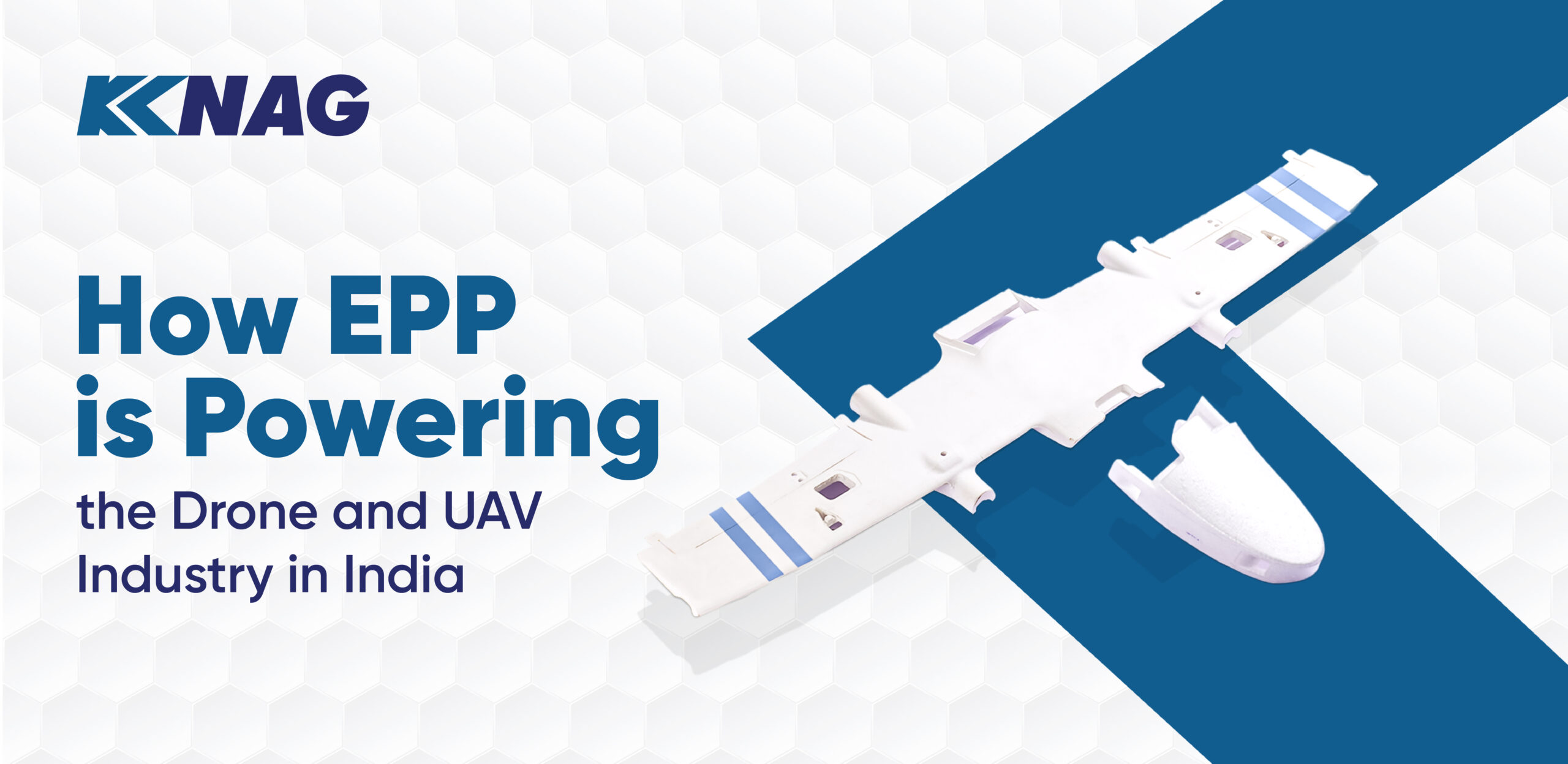
As India takes flight into the drone and UAV era, one challenge stands out: how can manufacturers design drones that are lightweight for longer endurance, durable for repeated landings and sustainable for the future?
While software and aerodynamics often grab the spotlight, the true enabler of drone performance lies in the materials chosen to build them. This is where Expanded Polypropylene (EPP) components make the difference. With unmatched resilience, low density and moulding versatility, EPP is powering India’s drone revolution from precision agriculture to defence and logistics.
According to the Ministry of Economy and Industry’s Foreign Trade Administration, India’s drone market is projected to grow from USD 654 million (approx. INR 5,450 crore) in 2024 to USD 1,437 million (approx. INR 11,970 crore) by 2029 [1]. Sector-wise, agriculture, surveillance, logistics and defence are leading adoption.
Government initiatives like the Drone Shakti scheme, coupled with infrastructure investments and supportive regulations, are accelerating innovation and positioning India as a global drone technology hub. As this growth accelerates, the choice of materials will become as important as advances in software or aerodynamics.
Table of Contents
- 01. Why EPP Stands Out for UAV Applications
- 02. Key Material Challenges in Drone Manufacturing
- 03. How EPP Meets These Demands
- 04. EPP vs. Traditional Drone Body Materials
- 05. India’s Growing Drone Ecosysem and the Role of EPP
- 06. Global Applications of Fixed-Wing Drones
- 07. Expertise in EPP Moulding
- 08. K. K. Nag’s Flight Ready Innovation for Last Mile Delivery Drones
- 09. In Conclusion
- 10. FAQs
Why EPP Stands Out for UAV Applications
EPP foam is making a significant impact on drone manufacturing due to its multiple advantages. This material enables manufacturers to create drones that are both durable and lightweight.
The shock absorption, thermal insulation and moulding versatility of EPP for drones offer clear advantages over hard plastics, which add weight, or, in some cases, even carbon fibre, which can be brittle. This makes material science a central driver of how quickly UAVs can scale across industries.
Key Material Challenges in Drone Manufacturing
Drone materials must meet rigorous standards. They must be lightweight to optimise flight time, yet durable enough to resist impact, moisture, chemicals and extreme temperatures – especially in outdoor and defense environments. Traditional materials present limitations: hard plastics contribute excess weight, while composites often lack the toughness and environmental resilience required for long-term use.
How EPP Meets These Demands
Lightweight foam for drone design, like EPP, excels by offering:
- Lighter construction compared to hard plastics and composites, helping extend flight endurance and improve battery efficiency
- Multi-impact shock absorption to protect sensitive electronics during rough take-offs and landings
- Chemical resistance for agricultural environments and thermal stability for varied climates
- Custom moulding capabilities for aerodynamic, precise drone components to ensure accurate fitment with other drone parts
Its recyclability and non-toxic nature highlight sustainability credentials, aligning with today’s environmental-focused manufacturing practices.
EPP vs. Traditional Drone Body Materials
Compared with hard plastics and composites, the advantages of using EPP in drone manufacturing are clear. It provides superior impact resistance with useful flexibility and recyclability, while substantially reducing weight.
EPP provides a practical balance of ruggedness, low weight and sustainability for UAV production.
India’s Growing Drone Ecosystem and the Role of EPP
India’s drone ecosystem, driven by agriculture, surveillance, logistics and defence, is expected to continue rapid growth. With production-linked incentive schemes supporting domestic manufacturing and innovation, EPP helps Indian drone makers meet evolving industry standards for performance and sustainability.
The specialised expertise of K. K. Nag in manufacturing tailored EPP foam for drone components positions it as a key enabler in this expanding market. For Indian drone makers aiming at global competitiveness, access to such advanced solutions is increasingly becoming a differentiator.
Global Applications of Fixed-Wing Drones
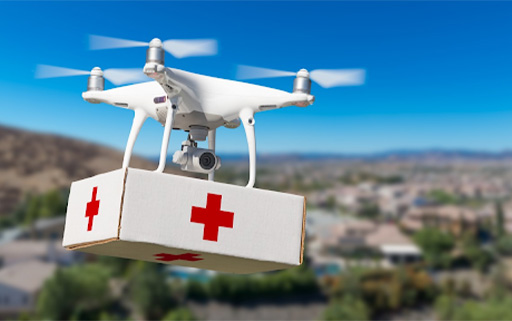
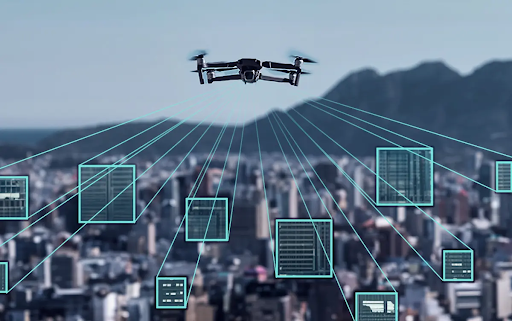
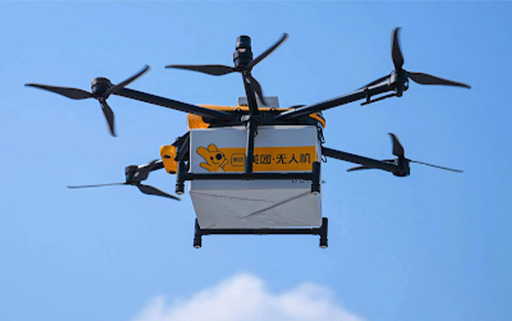
Fixed-wing drones are increasingly visible across the world in diverse applications. In healthcare, they are being used for emergency medicine delivery to remote villages. Surveillance drones support land measurement and infrastructure planning. In logistics, drones are piloted for grocery and food delivery, helping reduce congestion and shorten delivery times. These global examples illustrate the potential of UAVs and the role of advanced materials like EPP in enabling such progress.
Medicine Delivery
Surveillance
Grocery and Food Delivery
Expertise in EPP Moulding
The expertise of K. K. Nag leverages advanced bead foam technologies to provide precisely engineered, scalable and customised drone bodies and components. Our diverse manufacturing capabilities help Indian drone makers reduce weight without compromising strength, driving innovation and competitiveness in the global UAV market.
K. K. Nag’s Flight Ready Innovation for Last Mile Delivery Drones
Faced with the task of moulding a highly complex EPP nose foam for a global drone manufacturer, we were challenged with achieving multiple undercuts and tight dimensional tolerances that many believed weren’t possible in EPP. Even a leading raw material supplier raised concerns. Through a five-cylinder mould system and multiple development trials, we met every requirement and unlocked production of six additional EPP components. This project demonstrates how our specialised EPP capabilities support advanced aerospace applications, where performance and precision are non-negotiable.
In Conclusion
The synergy of low weight, resilience and sustainability positions EPP as a critical material for UAV manufacturing. Backed by robust industry growth data and government support, combined with the technological leadership of K. K. Nag, EPP will continue powering advanced drone designs meeting the diverse needs of the Indian market.
Looking ahead, materials innovation will remain central to ensuring UAVs deliver both performance and sustainability at scale.
To explore how K. K. Nag can support your UAV programmes, contact us directly or visit our dedicated EPP page.
FAQs
1. Why is EPP used in drone bodies?
Ans: EPP offers strong impact resistance, chemical stability and reduced weight, making drones more durable and efficient.
2. How does EPP improve drone performance?
Ans: By enabling lighter, shock-absorbing structures that enhance flight stability and battery efficiency.
3. Can EPP be used in heavy-lift drones?
Ans: Yes. Its adaptable properties support scalable manufacturing for drones of various sizes, including heavy-lift models.
4. Is EPP recyclable and sustainable for drone production?
Ans: Yes. EPP is 100% recyclable and environmentally friendly compared to many traditional materials.
Featured Blogs
How K. K. Nag Is Leading the Way in Polymer Solutions for EV Manufacturing
The automotive industry is at a pivotal moment. As the world shifts gears towards sustainable transport, electric vehicles (EVs) are becoming central to this transformation. In India, retail [...]
Why Polymer Components are Crucial in EV Manufacturing
The rise of electric vehicles has done more than just redefine the powertrain, it’s revolutionised the way manufacturers approach material selection and product design. Today, polymer components in [...]

Rotomoulded Insulated Boxes: The Key to Safe and Hygienic Food Handling
Despite stringent rules and regulations, the food industry is plagued with serious contamination and spoilage issues. Foodborne illness impacts approximately 100 million individuals each year in India [...]
Get in Touch with Us
We look forward to connecting with you!