EPS vs. EPP: Which Foam is Best for Your Packaging Needs?
As industries increasingly prioritise product safety, lightweight materials and sustainability, the demand for advanced packaging foam material is surging.
In fact, as per a Grand View Research report, the global packaging foam market is expected to grow significantly, projected to reach $7.15 billion by 2030, expanding at a steady CAGR of 7.4% from 2024 onward.
Among the various packaging foam types available, two foam materials often stand out: Expanded Polystyrene (EPS) and Expanded Polypropylene (EPP). While both offer excellent protection and versatility, they differ in durability, cost, recyclability and performance across various industries.
This blog will explore the key differences between EPS and EPP Foam, along with their industrial applications.
Table of Contents
What is Expanded Polystyrene (EPS) Foam?
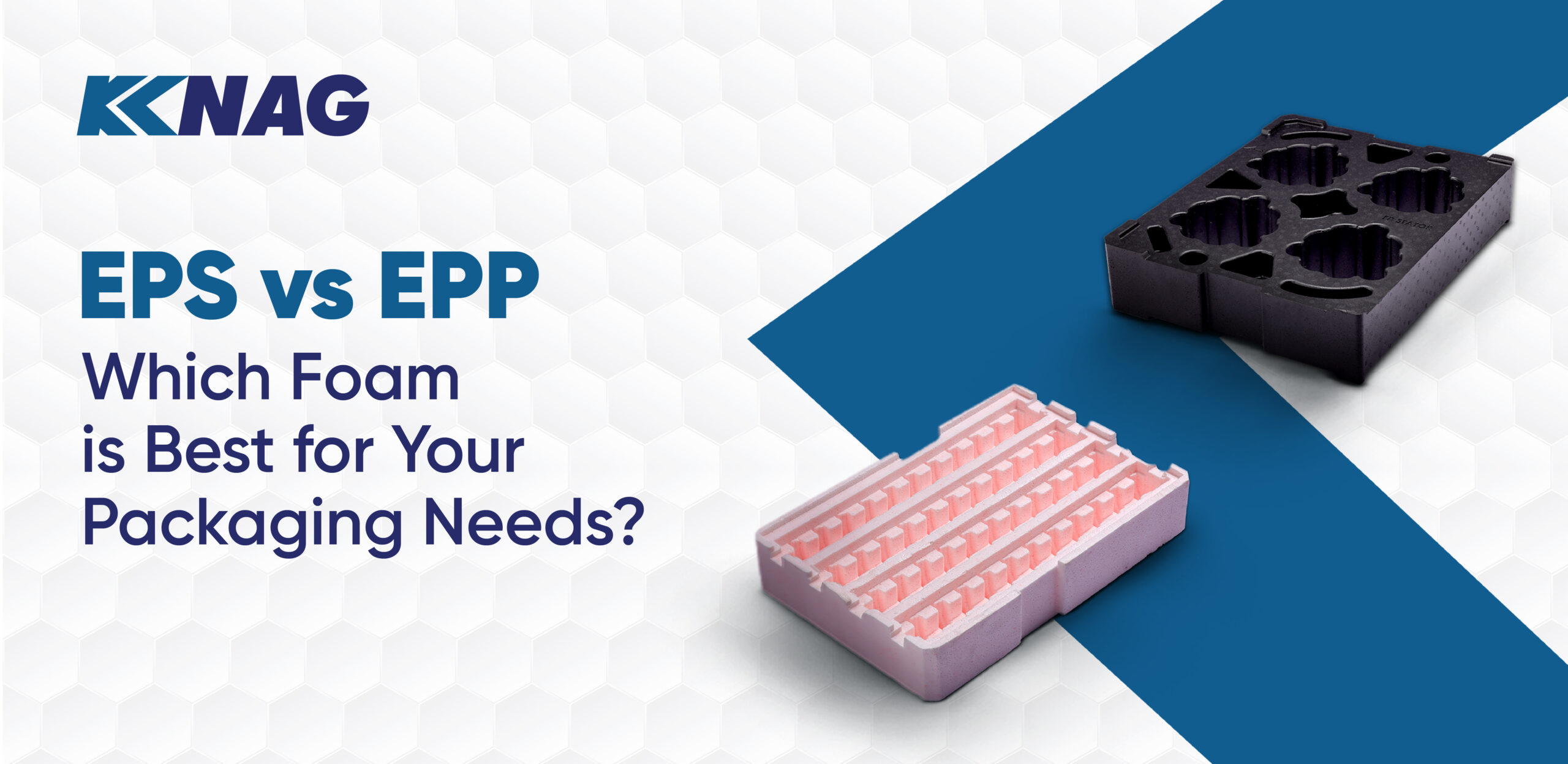
Expanded Polystyrene, commonly known as thermocole in India, is a familiar sight in everyday protective packaging foam. It’s the rigid white material often used to cushion electronics, appliances and glassware in product packaging. EPS is a lightweight foam with a closed-cell structure, which means its beads are sealed off from each other.
This structure is what gives EPS its excellent thermal insulation properties and makes it highly suitable for applications requiring structural integrity without much flexibility. It’s produced by foaming expandable polystyrene beads using steam, which then get moulded into desired shapes.
What is Expanded Polypropylene (EPP) Foam?
Expanded Polypropylene, or EPP foam, is a high-performance, versatile material that might not be as widely recognised by consumers but is a powerhouse in industrial applications. Like EPS, it also features a closed-cell structure. However, EPP foam is renowned for its remarkable flexibility, superior impact resistance and impressive resilience to deformation.
This means it can absorb significant shocks and then spring back to its original shape, making it ideal for multi-impact scenarios. EPP is pre-foamed with compressed air and while also moulded with steam, it requires higher pressure and longer cycle times compared to EPS due to its more complex manufacturing process.
What are the Key Differences Between EPP and EPS Foams?
The core distinction between expanded polystyrene vs expanded polypropylene lies in their polymer base and the resulting physical properties. EPS, derived from polystyrene, excels in rigidity and thermal insulation for static applications. It offers excellent cushioning for single impact, making it a cost-effective choice for many disposable packaging needs.
On the other hand, EPP, made from polypropylene, boasts superior durability and flexibility. Its ability to withstand multiple impacts and return to its original form makes it a champion for reusable and high-performance applications.
Here’s a quick packaging foam comparison between EPP and EPS:
| Property | EPS Foam | EPP Foam |
|---|---|---|
| Primary Feature | Rigid, excellent thermal insulation, single-impact absorption | Flexible, high impact resistance, excellent resilience, multi-impact absorption |
| Density | Generally higher density | Generally lower density |
| Strength | Less resilient, prone to cracking under repeated stress | More resilient, can withstand multiple impacts |
| Flexibility | More rigid | More flexible |
| Temperature Range | Susceptible to degradation at higher temperatures | Maintains integrity across a wider range of temperatures |
| Reusability | Recyclable and ideal for one-time, efficient applications | Highly durable, ideal for reusable foam packaging |
| Cost | Extremely cost-effective for high-volume, single-use packaging applications | Higher upfront cost as the packaging can be used multiple times over |
Applications of EPS Foam
EPS foam is mostly used in the packaging industry, particularly where cost-effectiveness and multiple impact protection are important
- Electronics and Home Appliances Packaging: Its excellent cushioning capabilities make EPS the go-to choice for protecting fragile items like televisions, washing machines and sensitive electronic components during transportation. EPS can be easily moulded into custom shapes, ensuring a snug and secure fit around products, preventing movement and damage.
- Food and Seafood Packaging: Due to its superior thermal insulation properties, EPS is widely used for insulated boxes to transport temperature-sensitive goods such as fresh fruits, vegetables and fish. It effectively maintains temperatures in the range of -110°F to 176°F (-80°C to 80°C), maintaining food quality and hygiene standards. It also has no taste or odour, ensuring the contents remain unaffected.
- Pharmaceutical Packaging: EPS is widely used to protect temperature-sensitive medicines, vaccines and biological samples during transit. Its insulation properties help maintain required temperature ranges, while its lightweight yet sturdy structure ensures protection from shocks and external impacts.
Applications of EPP Foam
EPP foam excels in applications demanding durability, multi-impact absorption and lightweight solutions, making it a favourite in high-performance sectors.
- Automotive Dunnage and Returnable Packaging: EPP foam is widely used to create custom dunnage bins, trays and inserts that protect high-value automotive parts, such as panoramic sun-roof assemblies, painted body panels, dashboards and other imported components, throughout storage and long-haul transport. Its multi-impact resilience prevents surface scratches and absorbs vibrations. EPP dunnage can be reused for hundreds of cycles without losing its shape, supporting lean logistics and reducing single-use packaging waste across the automotive supply chain.
- Industrial Dunnage and Reusable Packaging: The high strength and exceptional shock-absorbing properties of EPP make it an ideal material for reusable foam packaging and dunnage. It can safely transport sensitive industrial components multiple times, significantly reducing waste and overall transportation costs, thereby supporting circular economy practices in industries across India.
- Drones and Aerospace: In India’s expanding defence and aerospace sectors, EPP foam is gaining traction as a protective packaging material for drone components and delicate avionics rather than as a structural part of the aircraft itself. Its resilience to extreme temperatures, vibration and repeated impacts safeguards high-value mission critical systems during long-haul shipping and field deployment, delivering the reliability these advanced aerial platforms demand.
Also Read: EPS vs. EPP: Understanding the Differences and Applications
The Way Forward
When it comes to selecting the best foam for packaging, the choice between EPS vs EPP foam ultimately depends on your specific needs. If your priority is cost-effective, lightweight and efficient cushioning for disposable packaging, Expanded Polystyrene (EPS) is a strong choice. If you need packaging that lasts, choose Expanded Polypropylene (EPP). It is tough, absorbs impacts and can be reused many times. EPP suits returnable dunnage, protective inserts and reusable crates, keeping parts safe through multiple shipments.
As India’s manufacturing, e-commerce and logistics sectors continue their rapid growth, the demand for both these innovative packaging foam types will undoubtedly increase. By understanding their unique strengths, you can make an informed decision that optimises product protection, reduces waste and enhances your operational efficiency.
At K. K. Nag, we’ve been a trusted partner to India’s polymer and packaging industries for over 60 years. We design and deliver customised EPS and EPP foam solutions for sectors like automotive, electronics, consumer goods and more. Our focus on just-in-time production, technical precision and reliable logistics enables customers to protect their products efficiently while keeping supply chains moving smoothly.
To know more about our solutions or to discuss your requirements, please feel free to contact us.
FAQs
1. Which foam is better for packaging fragile items?
Ans: Both can protect fragile items. EPS foam is cost-effective for single-use, lightweight packaging. EPP foam is better suited for highly fragile items that require superior impact resistance or will be subjected to multiple impacts.
2. Is EPP foam more durable than EPS?
Ans: Yes, EPP foam is more durable than EPS. EPP is designed for multi-impact absorption and retains its shape after compression, whereas EPS is more rigid with lower resilience.
3. Can these foams be recycled?
Ans: Yes, both EPS and EPP foams are 100% recyclable. However, the ease and efficiency of recycling both depend on the available infrastructure.
4. What are the main differences in cost?
Ans: EPS foam is generally more cost-effective for high-volume, single-use applications. EPP foam has a higher initial cost, but its long-term reusability and superior durability can lead to significant cost savings over time for multi-trip applications.
Featured Blogs
How K. K. Nag Is Leading the Way in Polymer Solutions for EV Manufacturing
The automotive industry is at a pivotal moment. As the world shifts gears towards sustainable transport, electric vehicles (EVs) are becoming central to this transformation. In India, retail [...]
Why Polymer Components are Crucial in EV Manufacturing
The rise of electric vehicles has done more than just redefine the powertrain, it’s revolutionised the way manufacturers approach material selection and product design. Today, polymer components in [...]

Rotomoulded Insulated Boxes: The Key to Safe and Hygienic Food Handling
Despite stringent rules and regulations, the food industry is plagued with serious contamination and spoilage issues. Foodborne illness impacts approximately 100 million individuals each year in India [...]
Get in Touch with Us
We look forward to connecting with you!